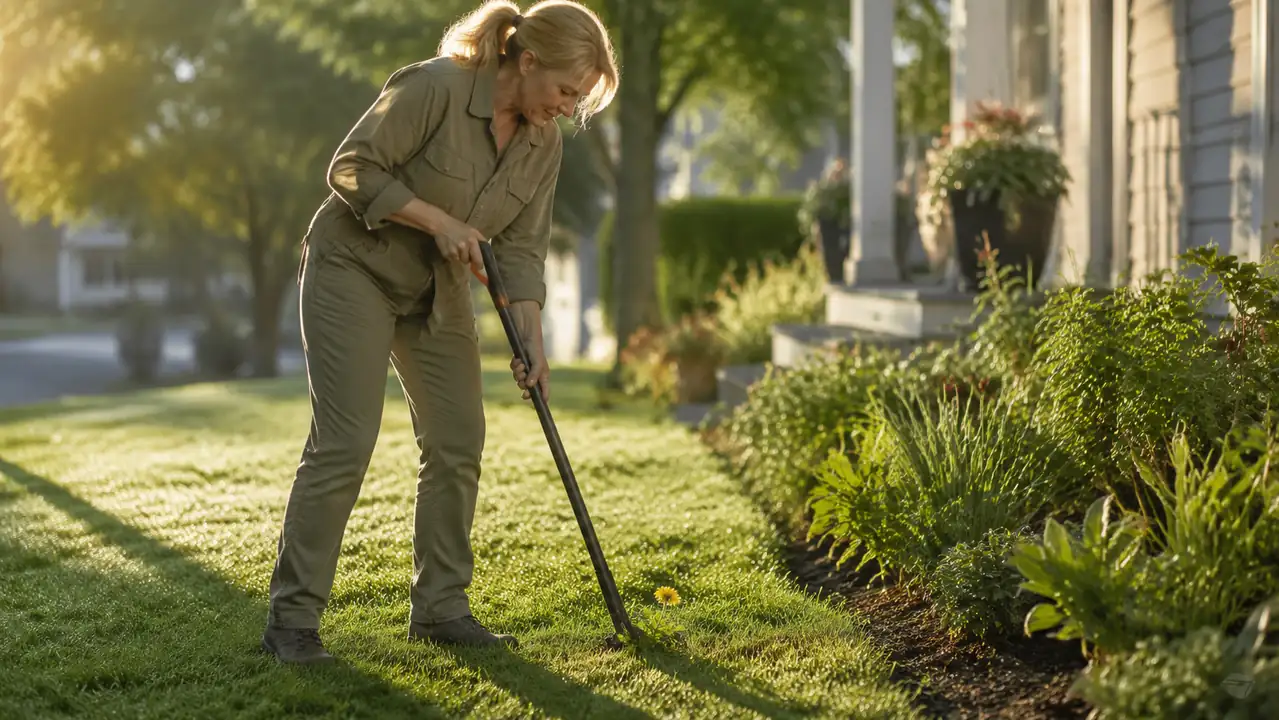
I have about forty minutes most mornings before I need to be somewhere, and weeds do not care about my schedule. For years I fought them on my knees with a hand trowel, and my knees eventually voted no. The tool that changed my mornings is the Fiskars Stand-Up Weed Puller, a 39-inch weeder with four serrated stainless steel claws and a foot platform that does the digging so my back doesn't have to. It has lived by my back door for two full seasons now, through spring mud and August-hard clay, and here are ten reasons I still reach for it before anything else. I bought mine mostly on a whim, on a Sunday when my lower back had had enough of the flower bed along the driveway, and I almost sent it back the first week because I couldn't get the claw placement right. I'm glad I stuck with it.
The tool that got me off my knees for good
If mornings are the only garden time you get, a tool that keeps you upright and moving fast matters more than anything else in the shed. Here's the one I actually use.
Amazon Check Today's Price on Amazon →You never have to kneel down
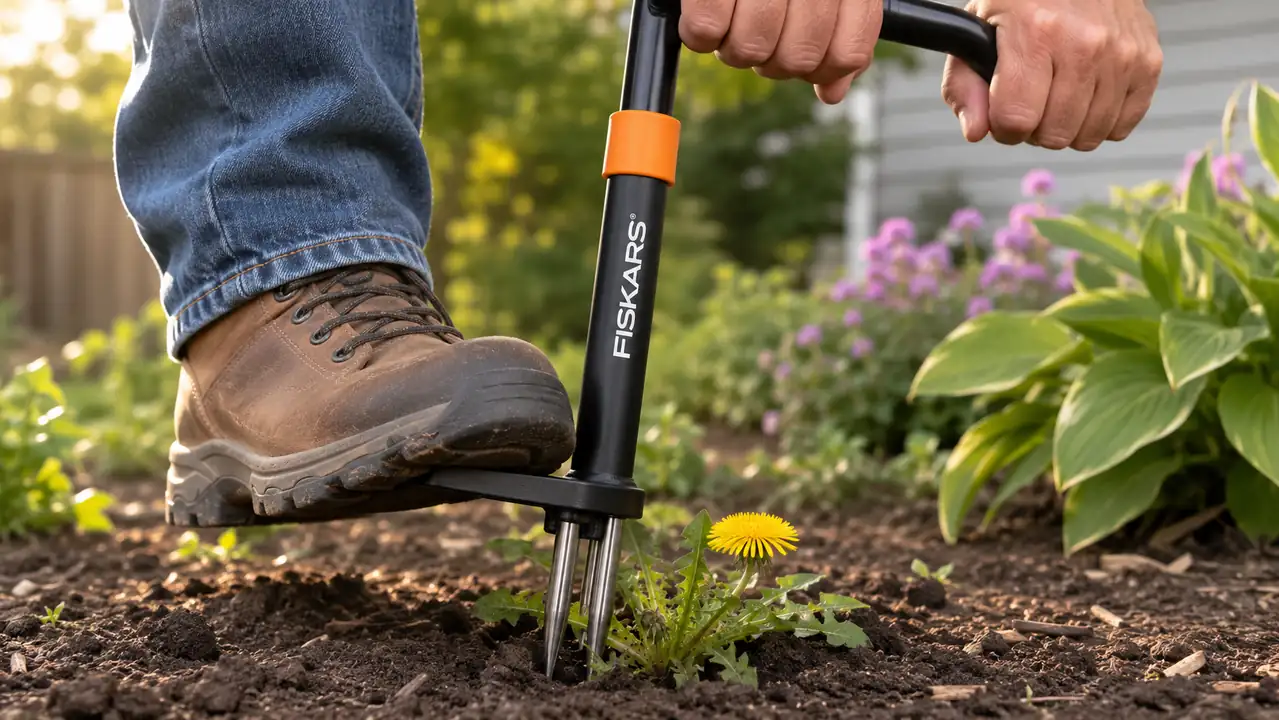
The whole point of a stand-up weeder is right there in the name. I step the claws over a weed, press down on the foot platform with my boot, and pull the handle back to my hip. No kneeling pad, no getting down in wet grass at six in the morning, no slow, creaky process of standing back up afterward. My knees noticed the difference within the first week.
It pulls the whole root, not just the top
A hand trowel or a quick yank by hand usually snaps the top off a dandelion and leaves the taproot sitting underground, ready to grow back in two weeks. The four claws on this weeder close around the base and drive down past the crown, so when I pull back I'm lifting the entire root out intact. I've had dandelions that simply stopped coming back in spots I hit consistently.
The foot platform handles soil a trowel can't
My side yard has clay that turns to brick by mid-July. A hand tool just bounces off it. Standing on the foot platform of the Fiskars lets me put my full body weight behind the claws, and that's enough force to get through soil that would have taken three tries with a trowel. It made the driest part of my yard actually manageable again. Even on the days I'm rushing, I don't have to psych myself up for the hard patch of ground the way I used to with a trowel.
It works whether the ground is soaked or hard
I've used mine on soggy April mornings after a week of rain, and I've used it on cracked August dirt that hadn't seen water in ten days. The claws bite in either way, though wet soil is obviously the easier job. Having one tool that covers both ends of the season means I'm not swapping equipment every time the weather changes, which matters when I only have a few minutes to work with. That matters more than it sounds like when the weather flips from a dry stretch to a downpour overnight, which happens more often than any forecast ever seems to predict around here.
It's genuinely faster over a long bed
Standing upright means I can move down a row without stopping to shift my knees or reposition a pad. I timed myself once out of curiosity: a 20-foot border along my fence line took about nine minutes standing versus closer to twenty on my knees with a trowel, mostly because I wasn't getting up and down constantly. On a forty-minute morning, that difference is the whole ballgame.
The eject lever keeps your hands out of the dirt
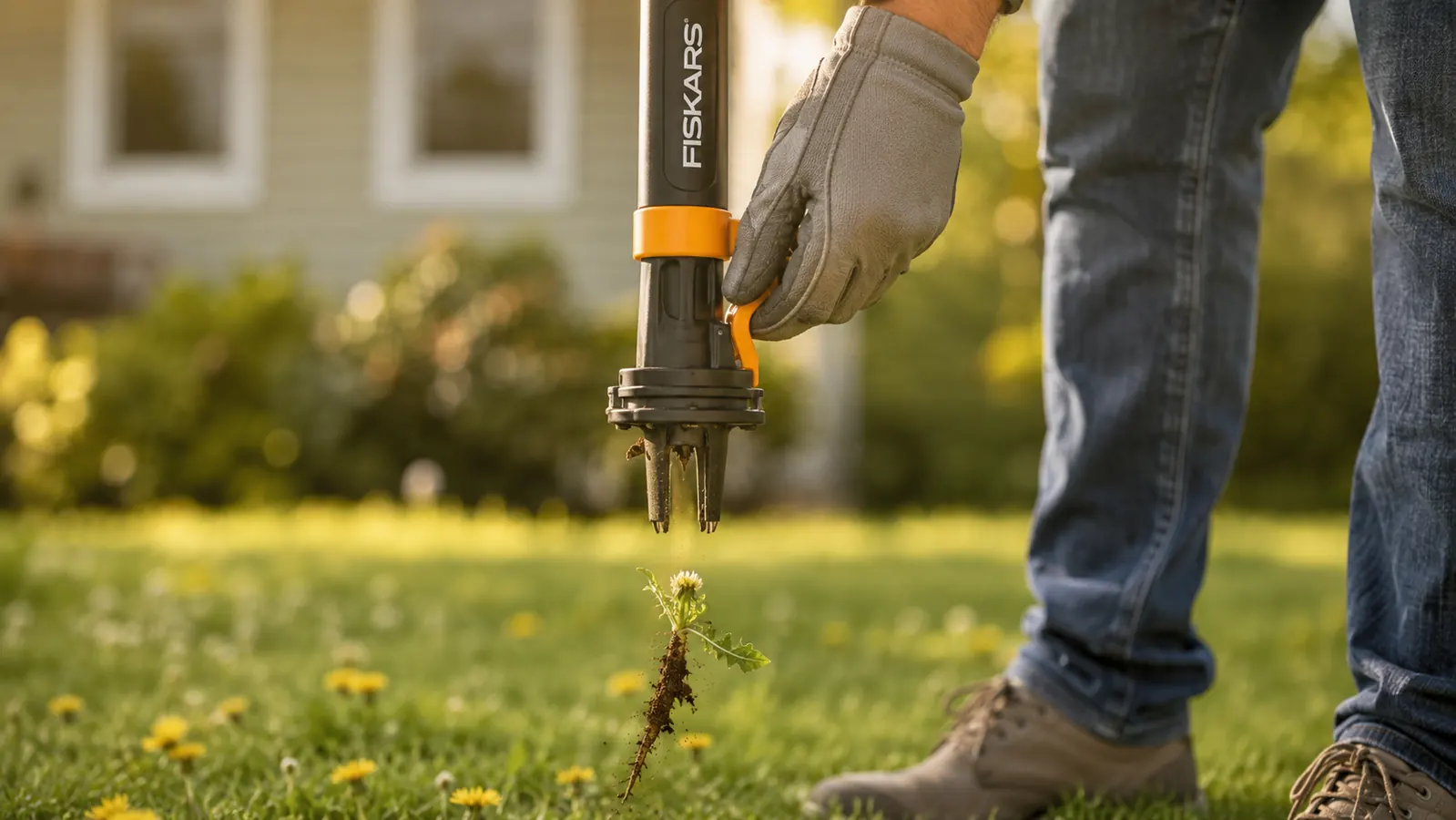
Once the weed is pulled, a foot-level lever ejects the root straight off the claws, so I never have to bend down and pry a muddy dandelion out with my fingers. It sounds like a small thing until you've done it the other way for a summer. My hands stay clean enough that I don't need to stop and wash them before I head inside. It also means I can keep moving between weeds without stopping to scrape debris off my gloves, which used to slow me down more than the actual pulling did.
Fewer repeat trips to the same spot
Because the root comes out whole instead of snapping off, I'm not walking past the same three dandelions every single week wondering why they keep coming back. Full removal means full removal. I've genuinely cut my weeding frequency in the worst patches of my yard, which frees up mornings for other jobs like deadheading or checking the tomato cages. I used to budget a whole Saturday morning for the worst bed by the mailbox. Now it's closer to fifteen minutes on a weekday before dinner, because the weeds simply aren't regenerating the way they used to.
The stainless steel claws hold up season after season
My Fiskars has been through two full growing seasons, left out in the rain more than once when I forgot to bring it in, and the claws haven't bent, chipped, or rusted through. I do wipe them down before storing it for winter, but I haven't babied it and it hasn't punished me for that.
The offset handle is easier on your wrists and shoulders
The handle isn't a straight pole, it's angled slightly, which puts the pulling motion more in line with your hip and shoulder instead of forcing your wrist to twist. I have a touch of tendonitis in my right wrist from years of yard work, and this is one of the few tools that doesn't aggravate it after a long session. After a long session with a straight-handled tool, that ache would linger into the next day. With this one, I can go out again the next morning without dreading it.
One tool covers dandelions, thistle, and other taprooted weeds
I don't own three different weeders for three different problem plants. Dandelions, thistle, plantain, anything with a single deep root instead of a spreading mat, this handles all of it the same way. That's one tool by the door instead of a rack of specialty gadgets I'd forget how to use.
What I'd Skip
The Fiskars isn't the right tool for shallow, spreading weeds like clover or creeping charlie, the claws are built for a single deep root and they'll just chew up turf if you try to use them on a mat of surface runners. For that I still reach for a hoe. It also takes a bit of practice to get the claw placement right on your first few tries, so don't expect to be perfectly efficient the very first morning you use it. I'd also skip it if your whole yard is soft raised-bed soil with almost no weeds worth naming, since a tool this sturdy is really built for the stubborn spots, not for tidying up a bed that barely needs it.
Two seasons in, the claws still close the same way they did out of the box, and the only maintenance I've done is a quick wipe-down before winter storage. For a tool that sees dirt, gravel, and the occasional root ball every week from April through October, that's held up better than I expected for something in this price range.
The difference isn't that weeding got fun. It's that it stopped costing me the rest of the morning.
Ready for a morning routine that doesn't wreck your knees?
This is the same weeder I've used through two seasons of clay soil and soaked spring beds. Check today's price before your next morning outside.
Amazon Check Today's Price on Amazon →