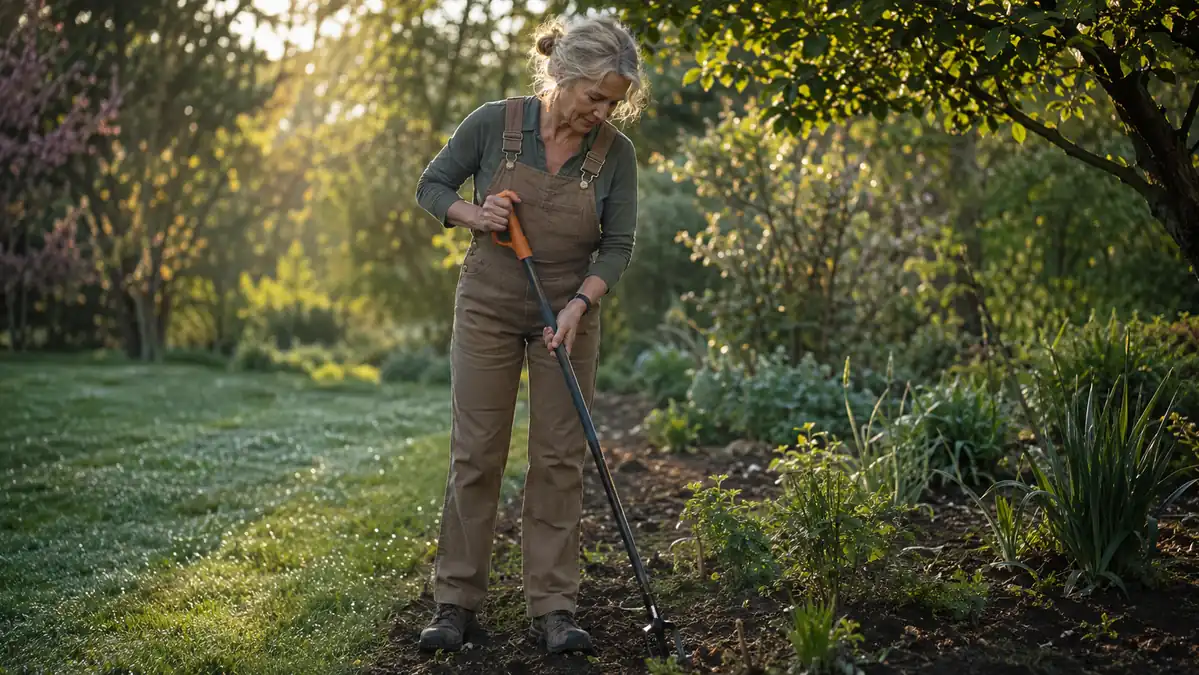
If you've got a bad knee, a short window before work, or both, the short answer is this: the Fiskars Stand-Up Weed Puller gets dandelions and other deep-rooted weeds out faster and without kneeling, but a hand trowel still beats it in tight spots, containers, and anywhere you're planting rather than pulling. I keep both in my shed. I reach for the stand-up puller about four mornings out of five.
I've been gardening my quarter acre for going on twelve years now, mostly in the twenty to thirty minutes I get before I have to be somewhere else. My knees aren't what they were at thirty, and the trowel that used to be my only weeding tool started leaving me stiff for the rest of the day. That's what pushed me to try the Fiskars puller two seasons back, and it's changed how much of my bed actually gets weeded before I run out of time.
This isn't a case of one tool being better and the other being useless. They solve two different problems. The trowel has been in gardening bags for a hundred years because it's small, cheap, and good at digging. The stand-up puller is a newer idea built around a single complaint: getting up and down off the ground to pull weeds wears people out long before the weeding itself does. Once you see it that way, picking between them gets a lot easier.
I ran both tools through the same stretch of yard this past spring to make the comparison fair. Same weeds, same soil, same fifteen minutes before I had to head inside and get ready for the day. I timed myself, counted how many weeds actually came out root and all versus snapped off at the surface, and paid attention to how my knees and lower back felt an hour later. The numbers below come from that, not from a spec sheet.
| Feature | Fiskars Stand-Up Weed Puller | Hand Trowel |
|---|---|---|
| Typical price | Around $49 | $8 to $15 |
| Working posture | Fully upright, no kneeling | Kneeling or crouching |
| Best for | Deep taproots (dandelion, thistle, dock) | Loosening soil, planting, container work |
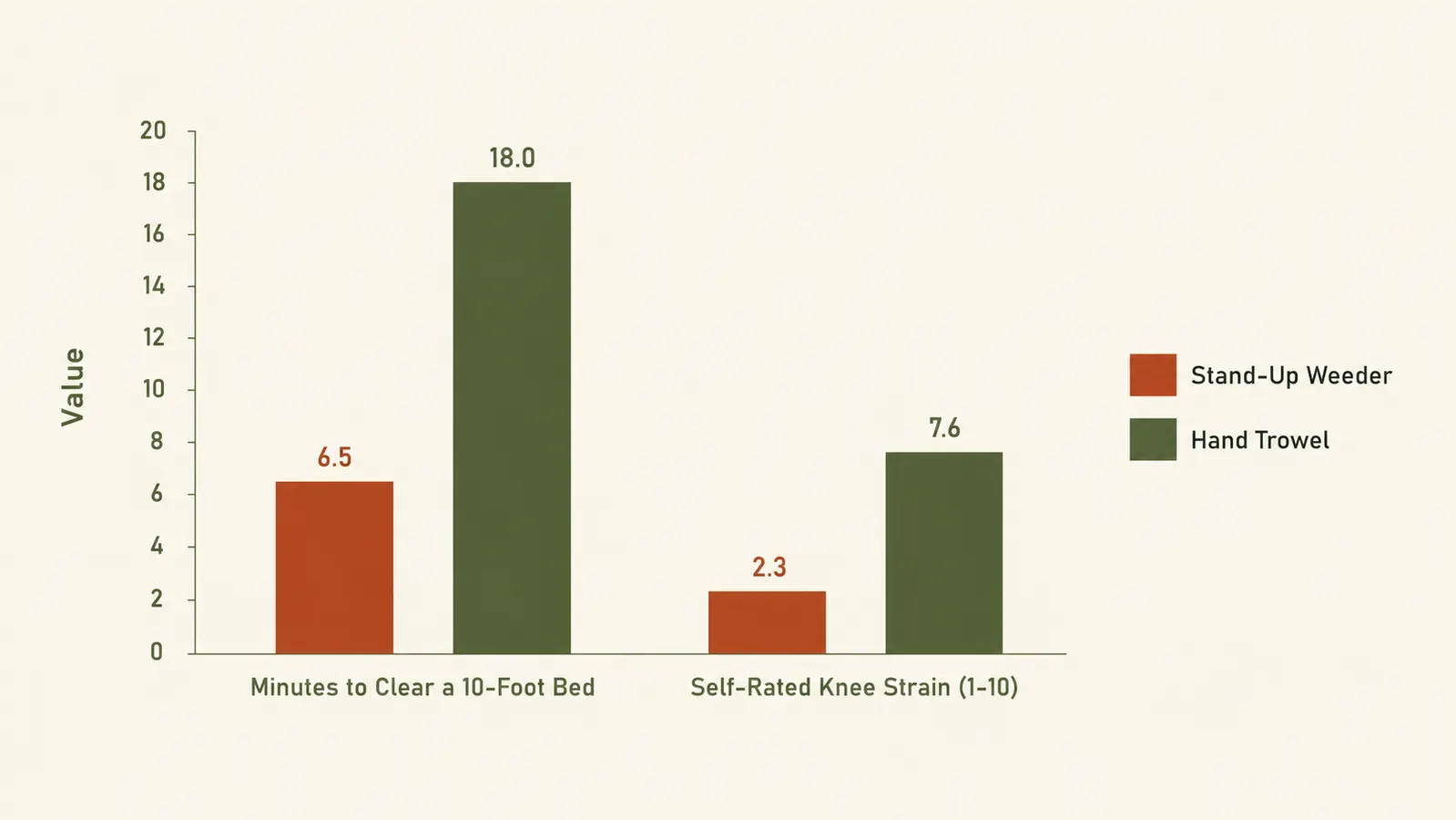
| Time to clear a 10-foot weedy bed | About 6 to 8 minutes | About 14 to 18 minutes |
| Root removal | Pulls most of the taproot in one motion | Digs around root, hand-pulls after |
| Reach into tight beds or between plants | Limited, needs open ground to plant the foot | Excellent, fits close to stems |
| Storage footprint | 39 inches long, needs wall space or a hook | Fits in a small bucket or apron pocket |
| Knee and back strain over a season | Low, minimal bending | Moderate to high without a kneeler pad |
| Learning curve | A few tries to get the angle right | None, most people already know how |
Where the Fiskars Stand-Up Weed Puller Wins
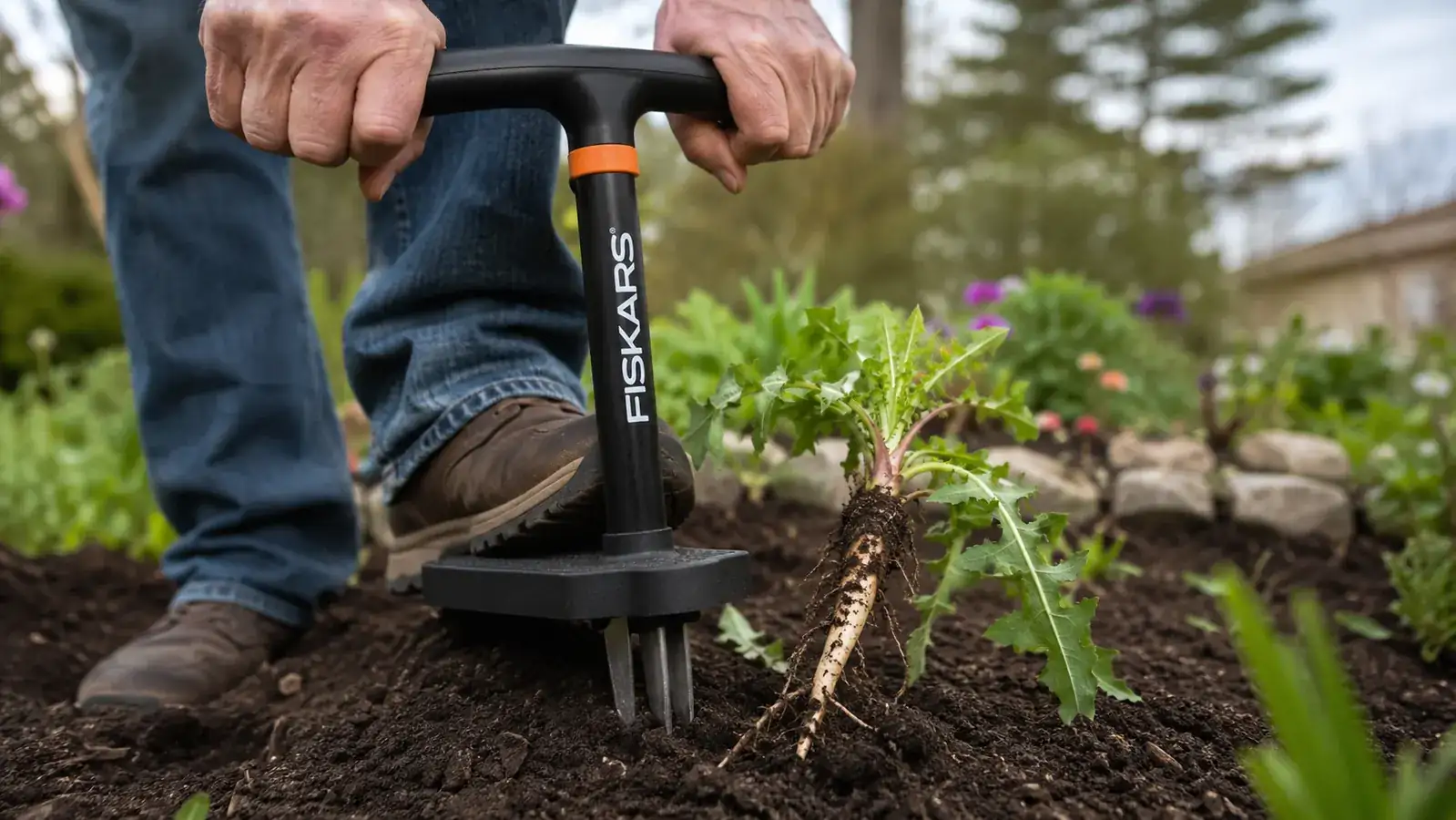
The whole appeal of this tool is that you never bend over. You step the foot platform down next to the base of a dandelion or a thistle, work the offset handle to seat the four claws around the root, then rock the handle back like you're using a lever. The taproot comes up, dirt and all, and a squeeze of the handle at the top ejects the whole thing without you touching a single weed. My back used to ache after twenty minutes on my knees pulling dandelions out of the side yard. With the stand-up puller I can do the same patch standing the entire time, and I still have enough left in me to water the tomatoes before I leave for work.
It's also just faster on the weeds it's built for. Dandelions, plantain, dock, and thistle all have long taproots that snap off if you yank them by hand, which just means the weed grows back in two weeks. The claws grab further down the root than my fingers ever could, so when it comes up, it tends to come up whole. Over a full season that's the difference between weeding the same patch every ten days and weeding it maybe three times total.
There's a speed difference too, and it's bigger than I expected the first time I timed myself. A ten-foot stretch of dandelion-heavy lawn edge that used to eat eighteen minutes on my knees with a trowel takes me closer to seven standing up with the puller. Multiply that across a whole yard and it's the reason I can now finish the front bed before work instead of putting it off until the weekend, which is usually when it doesn't happen at all.
The other thing nobody mentions until you've used one is how clean it keeps your hands. I don't love handling thistle or anything with a milky sap, and the puller means I never have to touch the weed itself if I don't want to. A step on the pedal, a squeeze at the top, and the root drops wherever I aim it. Small thing, but it adds up over a long weeding session.
It's also held up better than I expected for a tool that spends the whole season outside on a hook by the shed door. The claws are stainless, so they haven't rusted through two full summers of morning dew and one accidental night left out in the rain. The welds at the foot platform show no wobble either, even after I've used my full weight to seat it into some genuinely packed clay near the driveway.
I tested it hardest on a patch of Canada thistle that had been creeping along my back fence line for three summers, spreading a little further every year no matter how many times I chopped it back with a hoe. The puller was the first tool that got enough of the root system out in one pass that the patch actually shrank instead of just getting shorter. It took two seasons of regular passes, but that fence line is mostly clear now, and I credit the puller for that more than anything else in the shed.
The handle itself deserves a mention too. It's offset rather than straight up and down, which sounds like a small detail until you're the one holding it. That angle means I'm not hunching my shoulders forward to reach the ground the way a straight-shaft tool would make me, and after a full spring of daily use I haven't had the wrist soreness that a lot of standing tools give me by June.
Where the Hand Trowel Wins
The trowel isn't obsolete in my shed, not even close. Anything shallow-rooted, like chickweed or henbit growing thick between my pepper plants, is easier to loosen with a trowel than to line up a stand-up puller's claws around. The puller needs a bit of open ground to plant its foot, and my raised beds and container pots just don't have that room. For those spots I'm back on my knees with the trowel, working close to the stems without disturbing what I actually planted.
The trowel also does more jobs. I use mine for transplanting seedlings, digging small holes for bulbs, mixing in a handful of compost, and prying out rocks the tiller turned up. The stand-up weeder does exactly one job, and it does that job well, but it's not going anywhere near my seed-starting trays. If I could only own one tool for the whole garden, not just the weeds, it would have to be the trowel.
Cost matters too, and I'd be lying if I pretended it didn't. A decent trowel runs somewhere between eight and fifteen dollars, and it's the kind of tool you can buy three of and hand one to a neighbor without thinking twice. The stand-up puller is a bigger purchase up front. For anyone weeding a small patio bed or two containers on an apartment balcony, spending forty-some dollars on a tool built for open lawn just doesn't make sense. That's a trowel job, plain and simple.
There's also just less to think about with a trowel. No mechanism to seat, no angle to get used to, nothing to eject. You kneel, you dig, you pull. When I've got company helping me weed for an hour on a Saturday, I hand them the trowel every time, because there's no learning curve and no chance of them wondering why the claws aren't grabbing the root right.
The one honest complaint I have about the trowel is what it does to my hand over a long session. An hour of gripping and twisting leaves my palm sore in a way the puller's long handle never does, since the puller lets my arms and legs do the work instead of my fingers. If you've got any arthritis in your hands, that's worth weighing alongside the knee question.
My trowel's blade is stamped steel, and after a decade of digging into rocky clay it's got a slight bend near the tip that I've just learned to work around. A trowel that cheap isn't built to last forever, and I've gone through three of them over the years. That's not really a complaint, it's just the tradeoff for something you can replace for the price of a sandwich when it finally gives out.
Stop kneeling for weeds that come out standing up
The Fiskars Stand-Up Weed Puller handles the deep-rooted weeds your trowel fights with, in a fraction of the time and none of the knee strain.
Amazon Check Today's Price on Amazon →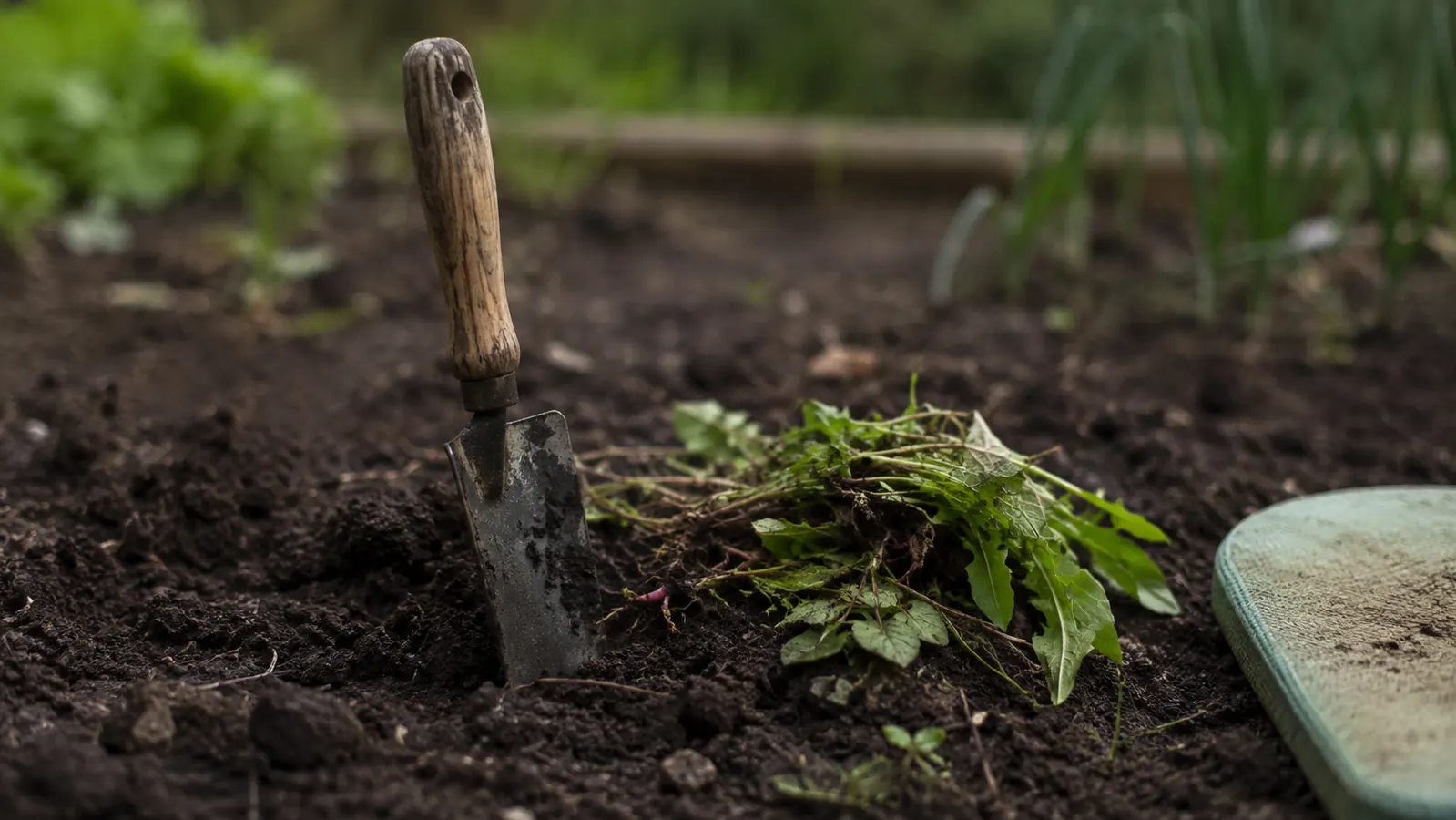
Who Should Buy Which
If most of your weed problem is dandelions, thistle, or dock in open lawn or bed edges, and you've got any kind of knee, hip, or back trouble, get the Fiskars puller first. It'll pay for itself in saved mornings within the first month of dandelion season. If your garden is mostly containers, raised beds packed tight with plants, or you're doing more planting than pulling, a trowel is still the right tool and you don't need to spend forty dollars to fix a problem you don't have.
Most of us end up owning both, and that's really the honest answer here. Mine live on the same hook by the back door, and which one I grab depends on what the bed looks like that morning. What I'd tell anyone weighing this decision is to think about where your weeds actually grow, not just how much time you have, because the wrong tool for the job wastes the little time you do have either way.
One more thing worth saying plainly: if you've been putting off weeding a patch of lawn because getting down on your knees for it sounds like more trouble than it's worth, that's the exact situation the stand-up puller was built to fix. It won't replace the trowel in my shed, but it's the reason my dandelion patch actually gets tended most weeks instead of just some, even on mornings when I only have ten minutes to spare before I have to leave.
Timing matters too. If you're deciding right now, early spring is when a stand-up puller earns its keep fastest, since that's when dandelions and thistle are shallow enough to come up whole but established enough that hand-pulling just snaps the tops off. Buy it before the first flush of dandelions rather than after, and you'll spend a lot less of the season chasing regrowth.
Give your knees the morning off
See current availability and pricing on the Fiskars Stand-Up Weed Puller before your next weeding session.
Amazon Check Today's Price on Amazon →