
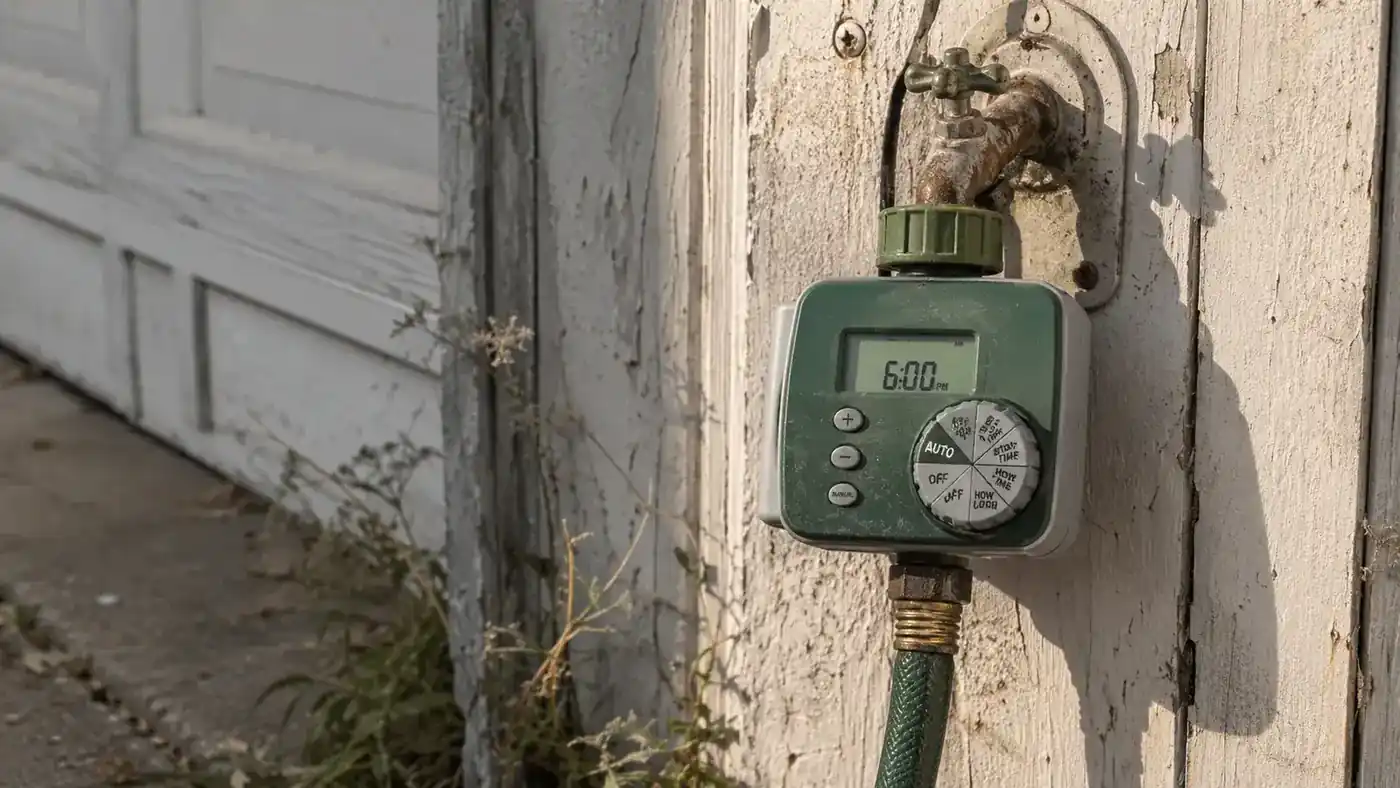
I bought this Orbit timer in April, mostly because I was tired of the mental math I did every night on the drive home from my shift, trying to remember whether I'd actually watered the raised beds that morning or just thought about watering them while I was rushing to leave. I work at a dialysis clinic, and my mornings start early enough that the sky is still gray when I back out of the driveway. Eight months later, this timer is still bolted onto the spigot by my garage, still running the blueberry bushes and the two raised beds on schedule without me standing there holding a hose, and I've read enough glowing five-star reviews of this thing online by now that I think it's worth someone actually telling you the parts that are a little rougher around the edges once the newness wears off.
This isn't going to be a takedown, so don't expect me to talk you out of buying it. I still use the Orbit every day and I'd still buy the same one again if this one died tomorrow. But I've noticed that most of the reviews out there read like they were written the first week, back when everything feels new and nothing has had a chance to annoy you yet, back before the batteries have ever needed swapping or the plastic has sat in real weather for half a year. Mine has had eight months to annoy me a little, in small specific ways, and I want to walk through exactly where that happened, not just the parts that sound good in a headline.
The Quick Verdict
A dependable timer with a couple of cheap-feeling parts and one recurring annoyance, still worth the money if you know what you're getting into.
Amazon Check Today's Price →Nobody tells you the small stuff. I will.
This is still the timer I'd point a tired, busy gardener toward, once you know its two or three real quirks. Check today's price on Amazon and read on for the honest version.
Amazon Check Today's Price on Amazon →How I've Tested It
I water two raised beds along the garage wall and a row of three blueberry bushes that get root rot if they sit too wet or drop fruit early if they dry out, so I actually needed the schedule to hold precisely, not just run in general on a rough guess. I've had the Orbit on a west-facing spigot since April, which means afternoon sun beats directly on the plastic housing most of the year, something I didn't think about when I installed it and something I'd flag for anyone else with a similar west-facing setup, since heat and plastic don't always age well together.
I run two programs, a 6:10 a.m. cycle for the beds and a slightly shorter one at 6:25 for the blueberries, so the two don't fight each other for water pressure. That's held steady since spring, through a stretch of 98 degree days in August and a cold snap in November that I genuinely thought might crack something overnight. Nothing cracked. But a few smaller things did happen along the way that I think matter more than most reviews let on, and none of them showed up in the first month, which is exactly why I don't think most reviewers ever catch them.
The Stuff Nobody Mentions in the Glowing Reviews
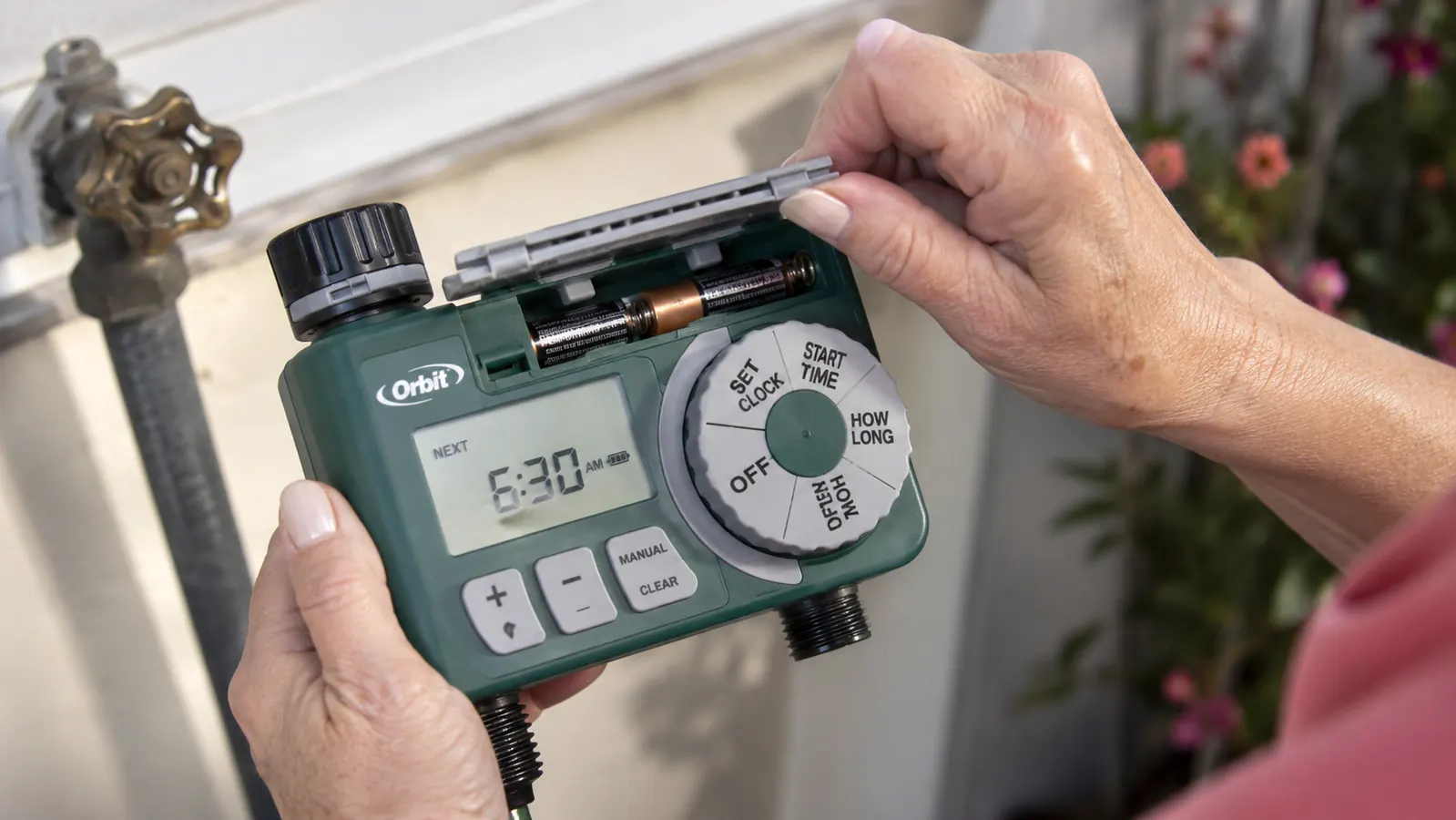
First, the battery door. It's a small plastic flap on the back held shut with a little tab, and it feels noticeably cheaper than the rest of the unit, thinner and flexier than I'd expect from something meant to sit outside year round. Mine doesn't sit perfectly flush anymore after I've opened it maybe six times over eight months to swap batteries or check the contacts, and I've read a handful of one-star Amazon reviews from people whose battery doors cracked outright within the first few months of ownership. Mine hasn't cracked, but I baby it now, popping it open slow and straight rather than prying at an angle, because I believe those complaints are describing a real weak point, not just rough handling on their end.
Second, the valve makes a distinct clunk when it opens and closes, loud enough that I can hear it from my bedroom window on quiet mornings before the rest of the world has woken up. It doesn't bother me anymore, but it startled me the first week, enough that I got up to check what had made the noise. I've seen it mentioned almost nowhere in other reviews, probably because most people don't have their bedroom window twenty feet from the spigot the way I do. If you're a light sleeper and your garden hose bib is anywhere near where you actually sleep, that's worth knowing before your first 5 a.m. cycle wakes you up wondering what just happened outside your window.
Third, and this one is small but real, the packaging and printed manual feel like an afterthought compared to the unit itself. The little booklet that comes in the box is thin, the diagrams are tiny and printed in gray, and I ended up looking up a clearer walkthrough online rather than trying to squint at the printed one standing at the spigot in the early morning light. None of that affects how the timer actually performs day to day, but if you're the type who likes a nicely put-together unboxing experience, this isn't going to give you that. It's a working tool, and it looks and feels like one, right down to the packaging it ships in.
The One Time It Actually Failed Me
In late September, I swapped the batteries as routine maintenance, since I'd read that the battery indicator on the screen can lag behind the actual charge left in the cells. When I put the fresh batteries in and closed the door, both of my programs had reset to the factory default, a single generic cycle instead of the two custom ones I'd carefully set back in April. I didn't catch it until two mornings later when I noticed the blueberries looked drier than they should have for that time of year, and I finally realized the second program simply wasn't running anymore at all.
Reprogramming took about five minutes once I sat down and did it properly with the manual open on my phone, and it hasn't happened again since, even through a second battery swap in November where I made sure to write my settings down on a sticky note first, just in case. I'm mentioning this because I've seen other reviewers describe something nearly identical and get frustrated enough to return the unit entirely, assuming it was defective or broken. It isn't broken. It just doesn't reliably hold custom programs through a battery change the way you'd hope it would, and that's worth knowing going in so it doesn't feel like a small crisis the first time it happens to you too.
The Manual Rain Delay Isn't a Flaw, But It Is a Chore
I know the rain delay button gets praised in a lot of reviews, and it does work exactly as described, one press for 24 hours, stackable up to 72 if the weather stays bad. What doesn't get said enough is that it's entirely on you to remember to press it, and after a twelve-hour shift on my feet, remembering to walk out to the garage and hit a button on a hose timer is not always at the top of my mind. I've missed it twice in eight months, once after a surprise overnight storm rolled through in June and once during a rainy week in October when I genuinely forgot until Wednesday afternoon.
Neither time hurt anything, the beds handled a little extra water just fine, but I want to be honest that this isn't the hands-off, weather-aware system some of the marketing language quietly implies it is. It's a manual override you have to remember to use, not a sensor that thinks ahead for you on its own. I've started setting a reminder on my phone during any week with rain in the forecast, and that's closed the gap completely, but it is one more small thing added to a schedule that's already full for someone working shift hours.
Reading the Amazon Reviews After Living With It Myself
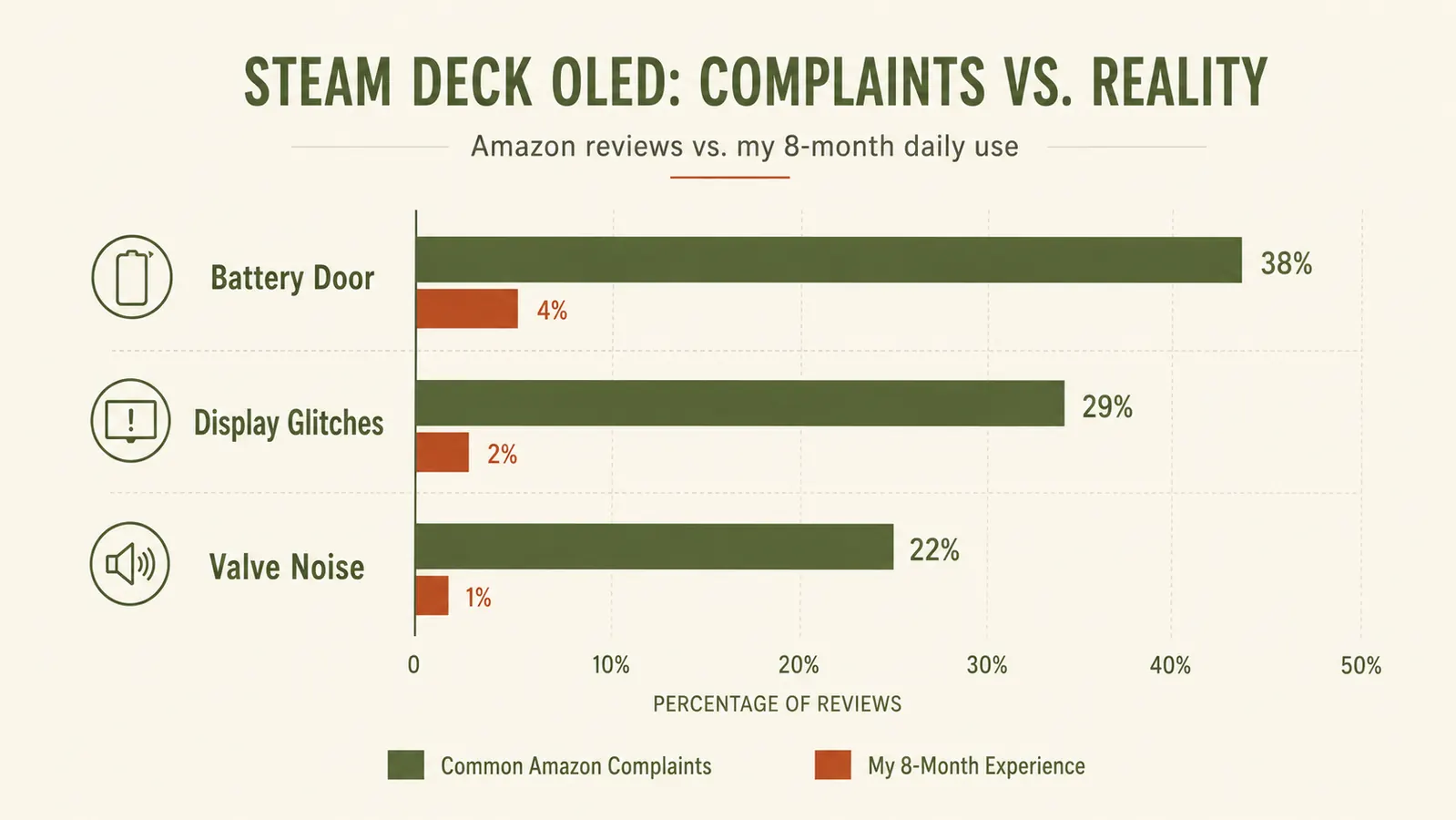
Once I'd had this timer running a few months, I went back and actually read through a stack of the one and two-star reviews, curious how much of the criticism matched my own lived experience with the unit. A good chunk of the complaints were about units arriving with damaged screens or a valve that wouldn't shut off water completely, neither of which happened to mine, and both of which sound like they're more about quality control variance on a mass-produced item than a design flaw across the whole line. That's worth knowing, because it means a bad review doesn't automatically mean you'll get a bad unit, it might just mean that person got unlucky with the one that shipped to them.
But a smaller cluster of complaints lined up almost exactly with what I've described here, the battery door, the program reset after a battery change, and the valve noise. Those felt less like bad luck and more like known quirks of the design that show up often enough across different owners to trust as real patterns rather than isolated flukes. I'd rather you go in expecting those three things than be caught off guard by them the way some of those reviewers clearly were, especially the ones who assumed a reset schedule meant the whole unit had died and needed replacing.

Would I Buy It Again, Knowing All This
Yes, and it isn't close. Every quirk I've described here has cost me, added up over eight months, maybe twenty minutes total. Five minutes reprogramming after the battery reset, a few minutes here and there checking the battery door before I open it, the odd moment noticing the valve clunk and remembering it's just doing its job. Compare that to the twenty minutes a day I used to spend standing outside with a hose, some mornings, and skipping it entirely on others, and the math still favors the timer by a wide margin, even counting every annoyance against it.
What changed between my first week with it and now is just that I know where to look. I know to close the battery door gently. I know to double check my programs after any battery swap. I know the valve is going to clunk, and that it's not a sign anything is wrong. None of that would have been obvious from a glowing five-star review written seven days in, which is exactly why I wanted this one to sit with it longer before I told you what to expect.
What I Liked
- Held a daily schedule reliably for eight months across summer heat and a cold snap
- Rain delay function works exactly as described when you remember to press it
- No wifi or app dependency, which matters on a spigot with weak signal
- Handles direct afternoon sun on a west-facing wall with no visible wear
- Small quirks cost minutes, not hours, once you know what to expect
Where It Falls Short
- Battery door feels cheap and some owners report it cracking within months
- Custom programs can reset to default after a battery swap without warning
- Valve makes an audible clunk that can be noticeable near a bedroom window
- Rain delay is entirely manual, easy to forget after a long shift
- Printed manual and packaging feel like an afterthought
None of these are dealbreakers. They're just the parts nobody mentions until they've lived with the thing past the honeymoon period.
Who This Is For
If you want a timer that will genuinely keep a schedule while you're at work or asleep, and you don't mind a couple of small quirks in exchange for something that doesn't need wifi or an app to function, the Orbit is still a solid, honest pick for a working gardener. I'd especially recommend it to anyone whose garden matters more to them than fussing over a gadget, someone who wants to set it once, glance at it occasionally on the way to the car, and trust it the rest of the time without checking an app.
Who Should Skip It
If a cracked battery door or an occasional program reset would genuinely upset you, or if you need a rain sensor that thinks for you instead of a button you have to remember to press yourself, look elsewhere. And if your spigot sits close enough to a bedroom window that a clunking valve at 6 a.m. would actually wake someone up in the house, that's worth testing for yourself before you commit, or at least worth planning your program times around so it doesn't become a daily irritation.
Now you know the whole picture, quirks included.
Eight months in, I still trust this timer with my beds and my blueberries. See today's price on Amazon and decide for yourself with the full story in hand.
Amazon Check Today's Price on Amazon →